| |||||

• polskie
• Zamów informacje o nowościach z wybranego tematu • kontakt |
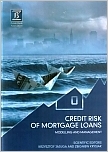
CREDIT RISK OF MORTGAGE LOANS. MODELLING AND MANAGEMENT.JAJUGA K. KRYSIAK Z.wydawnictwo: POLISH BANK ASSOCIAT, 2005, wydanie Icena netto: In 2003 the Polish Bank Association published the book under the title 'Conditions and development of mortgage loans credit risk'. Our intention was to attract attention of real estate professionals and show them how important for financial institutions is risk modelling. What are the basic reasons for the bank to undertake this subject and how such models are created? As a conclusion - to present how extended risk modelling could limit the banks' risk, at the same time, lowering cost of loans. 
We knew that this subject might be of great interest to all institutions operating on the real estate market due to dynamic growth of mortgage loans in property finance. Yet it had turned out that the interest was even larger then we expected initially, so we have decided in a very short period, in three months only, to prepare the next issue related to mortgage loans credit risk. The risk of an institution financing mortgage loans means a possibility of facing difficulties in receiving payments on time. When setting up a credit risk management policy for mortgage loans, a bank should start with describing conditions and rules for identification, measurement and monitoring of the credit risk. The primary criteria for risk identification are income and loan payment relation, value of mortgage loan collateral (property) and economic environment during the term of the loan. Having such an analysis banks are or would be using a tool, which would allow them to automate credibility valuation, as well as automate collateral valuation and loan terms. Scoring cards are such a data generation tool. Introducing scoring methodology requires fulfilling some of the basic conditions. One of these conditions is probability of default. To value it, internal and external statistical data is required. Giving a customer the specified attributes and using statistical methods of analysis, the bank is able to determine with large probability whether - and to what extend - is exposed to risk. The second important condition is possibility of using data base related to value of mortgage loan collateral. Dropping or increasing value of a property in loan term has direct influence on customer behavior. Another risk type is prepayment risk. It is especially important in the case of mortgage loans securitization, means financing by debt securities market. Selling mortgage loans for securitization, banks transfer risk to the investor-buyer of mortgage backed securities. That is why one of the most important issues for an investor in his risk assessment will be information on probability of prepayment. And once again we have to use internal (banks and insurers) and external (Credit Information Bureau) data bases. Securitization allows for better risk management also thanks to diversification of financing sources for mortgage loans. Arranging risk transfer in the securitization process, banks should follow the New Capital Accord. There are two basic elements for risk management in securitization: credit enhancement and rating system to be conducted by credible agencies. Credit enhancement can be done through insurance products, especially default insurance. And also by credit guarantees provided by special guarantee funds. In all above listed elements of credit risk assessment, modelling and management should be supported by proper data. Creation of new data bases has been - and is at present - caused by the needs of providing with trustful data in planning, decision making in investment, and also in relation to the state security as well as required cost lowering of the domestic economy. The data bases are being created also for proper distribution of resources and payments, for monitoring performance of the State agencies or institution that are performing various tasks at the request of the State, and under the agreement of public-private partnership or private agreements. In each case creation, management and access control of such data bases are defined by the Parliament Acts or agreements, which determines the following issues:
It is hard to overestimate the economic impact of properly constructed data bases. The State, which from its nature is, according to its citizens, more frequently taking out and limiting on investments, could be a good provider and distributor of information that is required for economic activity. In economic development, better enterprises capacity utilization, and in secure and sustainable growth of the economy, the following data bases are of primary importance:
Effective and lawful registers and data bases activities are critical in building up trustfulness and usefulness. Unfortunately, despite the fact that many years have came, some data are not comprehensive and, in many cases, they are unworthy. The situation is improving systematically, but still there are many things to do to have collected data real, and to have persons collecting that data performing according the highest standards. The effectiveness of the data registers is being measured by users based on time of access, form of access, data entry, the form of updating and corrections. Unfortunately, despite all technological features, the access to most resources, and especially data entry and queries are being done according to the typical decision process, which exists in paper document processing. From the user's point of view, these procedures are lasting too long, and at the end, are ineffective. Changing the situation requires in some cases implementing alterations in legal framework, according to which the access to data transmission takes place only between the parties, which have formal relations. In every case, changes in access to data require new technologies and implementation of new security procedures. These examples of measurements, modelling and credit risk management of mortgage loans are the elements of the entire credit risk that not only banks, but also insurers, rating agencies, investment and pension funds, property valuers, and also real estate brokers are facing. This publication of the Polish Bank Association is addressed to all these professionals. This will not be our last publication. We would like to continue providing the knowledge in the field of mortgage loans risk management. We are confident that it will economize the mortgage loans underwriting process, and at the same time increase loan affordability for each Polish family. To achieve that, broad collaboration of all the above mentioned professions is required. Collaboration understood as joint cooperation in setting up legal and organizational conditions and also the framework for the secondary mortgage market. Such conditions would allow to: (i) Introduce product standardization, understood as using the same standards in mortgage loans underwriting, standardizing property valuation process, using the same rules in loan to value (LTV) calculation, cooperation in data capture system (using information technology) as well as access to that data for conducting market analysis, (ii) Encourage banks to sell mortgage loans portfolios, (iii) Use cadastre system for property valuation, which should be credible, complex, transparent and accessible for everyone, (iv) Use different instruments for mortgage loans enhancement, (v) Introduce an effective foreclosure system, (vi) Have influence on effective capital market, especially on investors activities (vii) Elaborate criteria for mortgage portfolio ratings to be implemented by a rating agency. Facing the current initiatives at building integrated mortgage market in Europe, Poland would like be an active member taking a part of responsibility for this integration by contributing its efforts in different form. One of the contributions is organizing annual Congresses on Housing Finance in the Central and Eastern European countries in Warsaw to support the integration on that part of Europe. These will be the key points of focus of the next publications planned already by the Polish Bank Association. Dear Readers, I have a strong belief this publication and all conferences and trainings related to it, will have positive impact on real estate finance market development. Krzysztof Pietraszkiewicz This book covers a number of important issues recording the mortgage finance market;
with particular focus on how can statistical methods help estimate the risk of adjusting
credit value versus its collateral, transfer problems and freezing risk in mortgage loan
portfolio. It also covers both benefits and risk resulting from securitization
transactions and the possibility to make use of derivative instruments in managing
mortgage credit risk. The reviewed book is an important step towards accelerating development of the real
estate market; it creates the foundation for practical knowledge about risk management,
particularly in the field of mortgage loans. The book inspires search for answers to
further vital questions that originates from banking practice of mortgage credit risk
management. In my opinion this book gathers many new considerations with regard to mortgage credit
risk and considers one of the first such studies in polish economic literature. The core
reader target group should not only comprise of bank employees dealing with mortgage
credits, but also students and research workers in departments of finance, banking and
management, people dealing with attracting and managing financial resources in housing
cooperatives and developer companies. I think that publishing this book is an important
initiative in educational and scientific activity of the polish bank association. This book is important input not only in the field of identifying credit risk, but also
is an unquestionable authors' contribution towards designing new structure of the
financial real estate market. Of particular importance here are proposals regarding
securitization of assets and a broader use of capital market for the purpose of financing
real estate transactions and also the shown concern on the security of the financial
system. This is the reason for granting very high marks to all studies presented in this
book. List of Contributors: Sarfaraz Ahmed, Jonathan Bowring, Marek Bryx, Michael Cohen, Józef Czaja, Catarina Figueira-Theodorakopoulou, Rasimavicius Gediminas, John Glen, Agnieszka Górska, Tadeusz Hołyński, Małgorzata Iwanicz-Drozdowska, Krzysztof Jajuga, professor, head of the Department of Financial Investments and Insurance, Wroclaw University of Economics, member of Academic Advisory Council of Professional Risk Managers International Association, expert in financial risk, financial markets, insurance, corporate finance and real estate. Norbert Jeziolowicz, Stanisław Kasiewicz, Małgorzata Kąkol, Stanisław Kolasiński, Zbigniew Krysiak, Ph.D., associate professor at Warsaw School of Economics. He is the author of more than 50 scientific publications. He is an advisor to the President of PKO Bank Polski S.A., the Chairman of the Real Estate Finance Committee at the Polish Bank Association. Till 2003 Executive Director of Real Estate Finance Department at PKO Bank Polski S.A. Jacek Łaszek, Santiago Libreros, Andrzej Liwacz, Jakub Mach, Dariusz Machała, Bolesław Meluch, Piotr Meluch, Sally Merrill, Atanasios Mitropoulos, Joseph Nellis, Claudia Nelson, Jan Robert Nowak, Dariusz Pałczyński, Krzysztof Pietraszkiewicz, Łukasz Reksa, Waldemar Rogowski, Dorota Skała, Michael Samuels, Douglas E.Whiteley, Jean-Bernard Wurm, Mariusz Wyżycki, Robert Van Order, Małgorzata Zaleska, Jolanta Zombirt. TABLE OF CONTENTS Authors Profiles Introduction (Krzysztof Pietraszkiewicz) Executive Summary from Scientific Editors (Krzysztof Jajuga, Zbigniew Krysiak) 1. IDENTIFICATION, MEASUREMENT AND MONITORING OF CREDIT RISK FACTORS 1.1. Credit Risk Assessment - Sources of Information (Mariusz Wyżycki, Dariusz Pałczyński)
2. CREDIT RISK MODELLING 2.1. Mortgage Loans Portfolio Credit Risk Modelling - General Approach (Krzysztof
Jajuga) 3. CREDIT RISK MITIGATION 3.1. Statistical Methods of Mortgage Loans Collateral Valuation (Józef Czaja) 4. FUNCTIONALITY OF THE INSTITUTIONAL FRAMEWORK IN RISK MANAGEMENT 4.1. Co-operation of Real Estate Finance Market Institutions in Risk Mitigation Process
(Marek Bryx) Hardback, 509 pages Księgarnia nie działa. Nie odpowiadamy na pytania i nie realizujemy zamówien. Do odwolania !. |