| |||||

• polskie
• Zamów informacje o nowościach z wybranego tematu • kontakt |
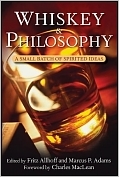
WHISKEY AND PHILOSOPHY: A SMALL BATCH OF SPIRITED IDEASALLHOFF F. ADAMS M.P.EDITORS MACLEAN C. FOREWORD BYwydawnictwo: WILEY, 2009, wydanie Icena netto: Thoughtful essays on the history, significance, and pleasures of whiskey Everyone becomes a philosopher with a drink in hand, but Whiskey & Philosophy takes this natural pairing to a new level. It explores a range of philosophical topics related to whiskey through engaging reflections written by philosophers, whiskey writers, and others. You will learn things that are both practical (how do tasting notes vary across guides and whiskey brands?) and thought provoking (why is there the popular conception that drinking whiskey makes people mean, and is it true?). Whether your interest lies in the drink itself or in the philosophical issues surrounding it, you'll find something to interest you in this unusual book.
Whether you prefer your whiskey neat or in a Manhattan, from the United States, Scotland, or elsewhere, Whiskey & Philosophy is your perfect drinking companion. Fritz Allhoff, Ph.D., is Assistant Professor in the Department of Philosophy at Western Michigan University. His research areas are in ethical theory, applied ethics, and the philosophy of biology/science. He is the editor of Wine & Philosophy and Food & Philosophy (with Dave Monroe). Marcus P. Adams, M.A., is a Ph.D. student in the Department of History and Philosophy of Science at the University of Pittsburgh. Table of Contents Foreword by Charles MacLean. Acknowledgments. Introduction: Start up the Still (Fritz Allhoff and Marcus P. Adams). UNIT I The History and Culture of Whiskey. Chapter 1: Scotch Whisky: From Origins to Conglomerates (Andrew Jefford). Chapter 2: Provenance and Authenticity: The Dual Myths of Scotch (Ian Buxton). Chapter 3: The Heritage of Scotch Whisky: From Monks to Surgeon Barbers (David Wishart). Chapter 4: Women, Whiskey, and Libationary Liberation (Ada Brunstein). Chapter 5: The Manhattan and You: Thinking about a Classic Whiskey Cocktail (Hans Allhoff). UNIT II The Beauty and Experience of Whiskey. Chapter 6: Whiskey, Whisky, Wild Living, and the Hedonistic Paradox (Robert Arp). Chapter 7: What to Drink? Why We Choose the Bourbons We Do (Mark H. Waymack). Chapter 8: The Phenomenology of Spirits: How Do Whiskeys Win Prizes (Douglas Burnham and Ole Martin Skilleas)? Chapter 9: The Ideal Scotch: Lessons from Hegel (Thom Brooks). Chapter 10: Where the Fiddich Meets the Spey: My Religious Experience (Harvey Siegel). UNIT III The Metaphysics and Epistemology of Whiskey. Chapter 11: As a Good Bartender Might: Whiskey and Natural Kinds (Thomas W. Polger). Chapter 12: Heisenberg's Spirits: Tasting Is More Uncertain Than It Seems (Jerry O. Dalton). Chapter 13: One Bourbon, One Scotch, and One Buddhist Theory of No-Self (Steven F. Geisz). Chapter 14: What Do Tasting Notes Tell Us (Ian J. Dove)? UNIT IV Ethics and Whiskey. Chapter 15: The Virtuous Whisky Drinker and Living Well (Richard Menary). Chapter 16: Nasty Tempers: Does Whiskey Make People Immoral (Dave Monroe)? Chapter 17: Whisky and the Wild: On Preserving Methods and Distilleries (Jason Kawall). UNIT V Whiskey: A Sense of Place. Chapter 18: Peat and Seaweed: The Expressive Character of Islay Whiskies (Kevin W. Sweeney). Chapter 19: Japanese Whisky: ‘It’s Called Queen George, and It’s More Bitched Up Than Its Name’ (Chris Bunting). Chapter 20: Whisky and Culture: From Islay to Speyside (Susie Pryor and Andrew Martin). Appendix A: Whiskey Tasting Notes. Appendix B: Our Favorite Whiskey Cocktails. Contributor Biographies. Index. 384 pages, Paperback Księgarnia nie działa. Nie odpowiadamy na pytania i nie realizujemy zamówien. Do odwolania !. |